

Artificial Intelligence (AI) is no longer a futuristic concept—it’s the driving force behind some of the most effective marketing strategies today. From personalized recommendations to predictive analytics, AI is transforming how brands interact with their customers.
Whether you’re a seasoned marketer or just getting started, understanding the role of AI in modern marketing is essential. In this blog, we’ll explore how AI is reshaping digital marketing and how you can leverage it to grow your business.
Why AI Is a Game-Changer for Marketers

AI empowers marketers to:
- Automate repetitive tasks
- Gain deeper insights into consumer behavior
- Deliver personalized experiences at scale
- Optimize ad spend and improve ROI
- Predict future trends and customer actions
These capabilities are revolutionizing traditional marketing approaches, making campaigns more effective and efficient.
Key Applications of AI in Modern Marketing
1. Customer Segmentation and Targeting
AI algorithms analyze massive amounts of data to segment audiences based on behavior, preferences, demographics, and more.
- Identify high-value customer groups
- Create tailored campaigns for different segments
- Reduce customer acquisition costs
Example: Netflix uses AI to recommend shows by analyzing viewing habits, which keeps users engaged longer.
2. Chatbots and Conversational Marketing
AI-powered chatbots offer 24/7 support and instant responses to customer queries.
- Improve user experience with real-time interaction
- Collect data for further personalization
- Handle FAQs, bookings, and even transactions
Tip: Use AI chatbots on landing pages to boost conversions and reduce bounce rate.
3. Content Creation and Curation
AI tools can assist in generating relevant, SEO-friendly content quickly.
- Automatically generate blog ideas, emails, and product descriptions
- Curate content based on user behavior
- Improve content relevance and engagement
Popular Tools: Jasper, Copy.ai, ChatGPT
4. Predictive Analytics
AI uses historical data to predict future customer actions.
- Forecast sales trends
- Identify churn risks
- Optimize inventory and pricing
Insight: Predictive modeling helps you anticipate demand and refine your marketing funnel.
5. Email Marketing Automation
AI makes email campaigns smarter, not just automated.
- Optimize subject lines, send times, and frequency
- Personalize emails at scale
- Increase open and click-through rates
Stat: Marketers using AI in email see a 41% increase in revenue per campaign.
How AI Enhances SEO Strategy
AI plays a crucial role in search engine optimization:
- Keyword Analysis: Discover high-ranking, low-competition keywords
- Content Optimization: Analyze readability, structure, and keyword usage
- Voice Search Optimization: Adapt content for voice-activated queries
Pro Tip: Use tools like SurferSEO or Clearscope for AI-assisted on-page optimization.
Benefits of AI in Marketing
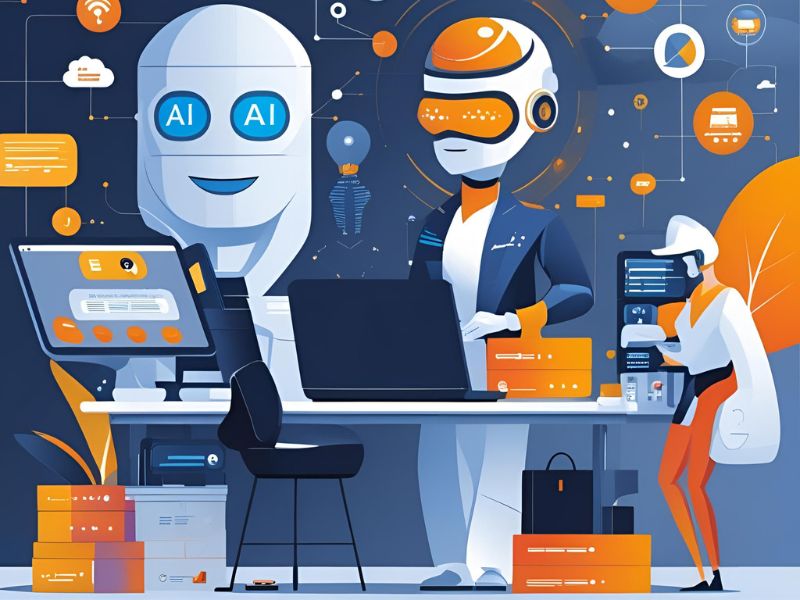
Let’s break it down:
✅ Improved decision-making
✅ Better customer engagement
✅ Reduced human error
✅ Higher ROI
✅ Scalable personalization
By automating the mundane and analyzing the complex, AI allows marketers to focus on strategy and creativity.
Challenges to Consider
While AI is powerful, it’s not perfect. Be mindful of:
- Data Privacy Concerns: Ensure compliance with regulations like GDPR
- Over-Reliance on Automation: Keep a human touch where it matters
- Initial Cost and Learning Curve: AI tools may require investment and training
Future Trends in AI Marketing
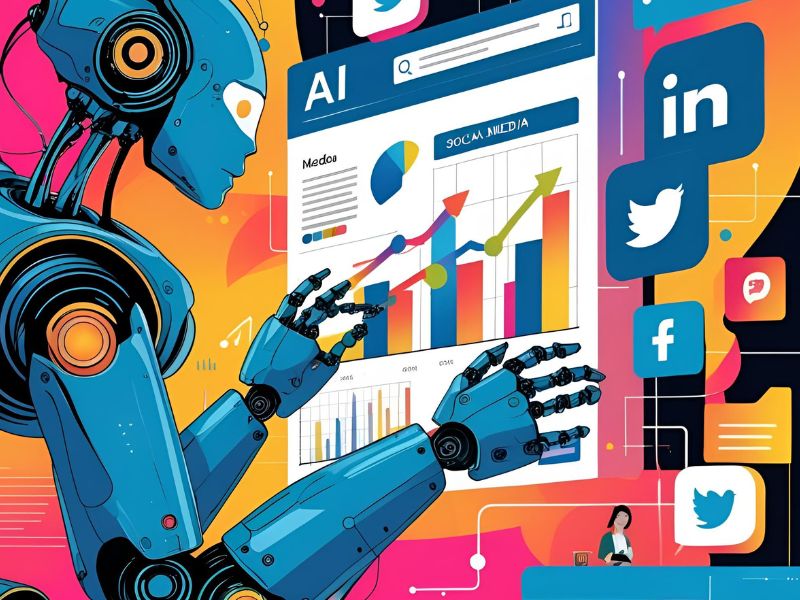
What’s next? Watch out for these trends:
- Hyper-Personalization powered by real-time data
- AI in Influencer Marketing for better ROI analysis
- Voice and Visual Search Integration
- AI-Generated Video and Interactive Content
Staying ahead of these trends will give your brand a competitive edge.
How to Get Started with AI in Your Marketing Strategy
Here’s a simple roadmap:
- Identify your goals – automation, personalization, analytics?
- Choose the right tools – based on budget and business needs
- Train your team – invest in skill-building
- Test and optimize – use A/B testing to refine results
- Track KPIs – monitor engagement, conversions, and ROI
Bonus: Start small. Even integrating AI for email optimization or chatbot support can bring noticeable improvements.
Final Thoughts
AI is not just a trend—it’s the future of marketing. Understanding and implementing AI in your strategy will help you stay relevant, efficient, and customer-focused. Whether it’s predicting trends, automating workflows, or creating smarter content, the role of AI in modern marketing is too significant to ignore.
The Shift From Traditional AI To Agentic AI
This blog post explores the evolving landscape of Artificial Intelligence, focusing on the significant shift from traditional AI models to Agentic AI. We will delve into the limitations of traditional AI, the core principles and capabilities of Agentic AI, and the potential impact of this paradigm shift across various industries. Furthermore, we will discuss the challenges and opportunities associated with the adoption of Agentic AI, providing insights into the future of intelligent systems.
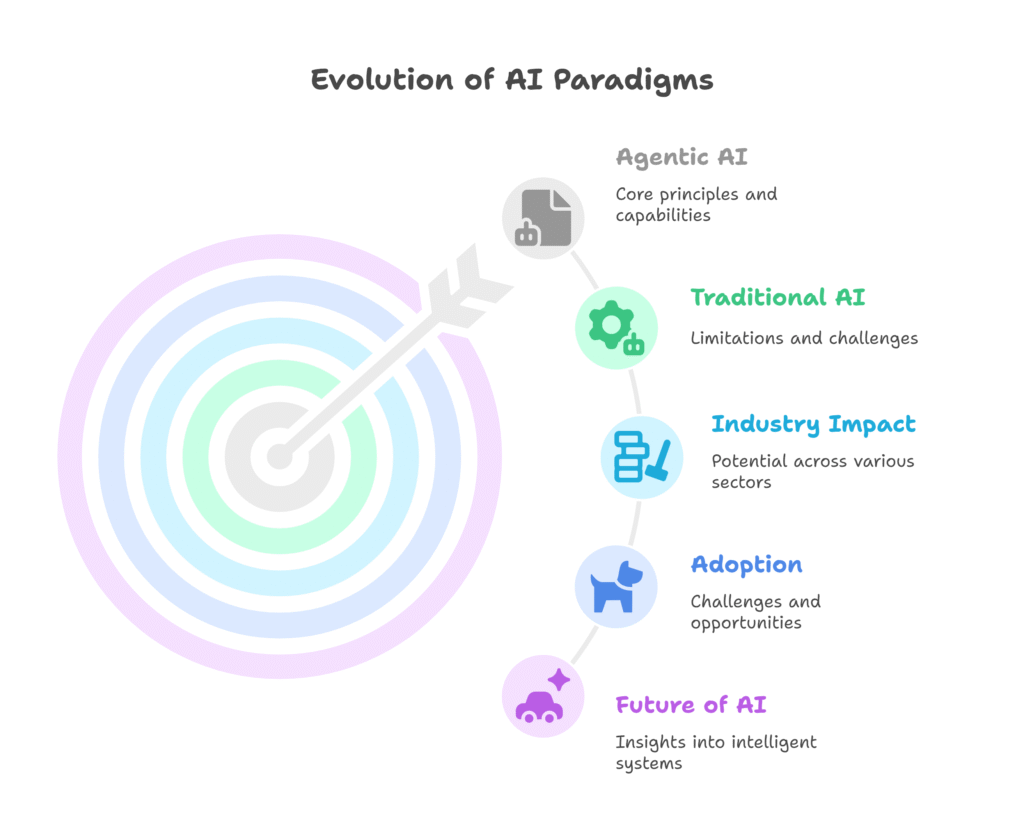
The Limitations of Traditional AI
Traditional AI, often characterized by models like deep learning networks, has achieved remarkable success in specific tasks such as image recognition, natural language processing, and game playing. However, these systems typically operate within narrow, pre-defined parameters. They excel at pattern recognition and prediction based on vast amounts of training data, but they often lack the ability to:
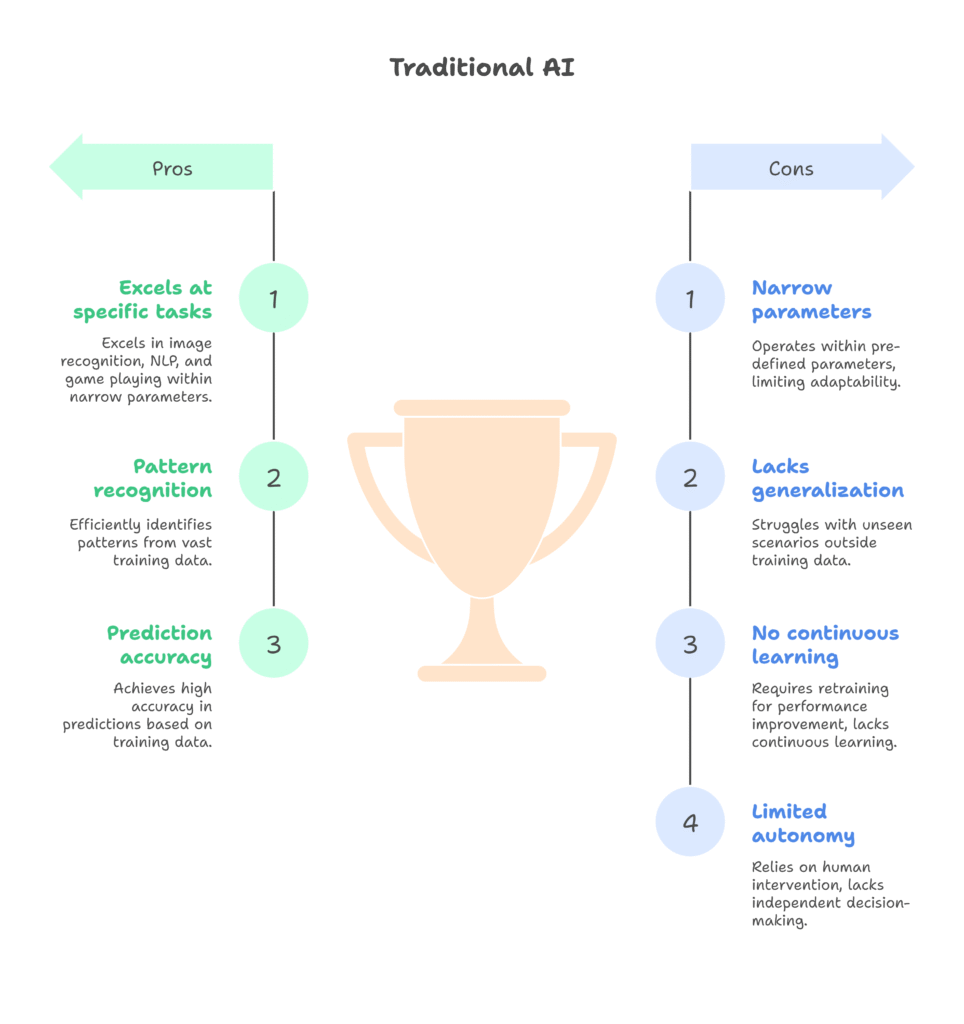
Exhibit Autonomy: These systems are heavily reliant on human intervention for task definition, data preparation, and performance monitoring. They lack the ability to operate independently and make decisions without explicit instructions.
Generalize to Unseen Scenarios: Traditional AI models struggle to adapt to situations significantly different from their training data. They are brittle and prone to errors when faced with novel inputs or changing environments.
Reason and Plan: These systems primarily focus on reactive responses rather than proactive planning and reasoning. They lack the capacity to formulate long-term goals and strategize to achieve them.
Learn Continuously: Traditional AI models typically require retraining on new data to improve their performance. They are not designed to learn continuously and adapt in real-time to evolving circumstances.
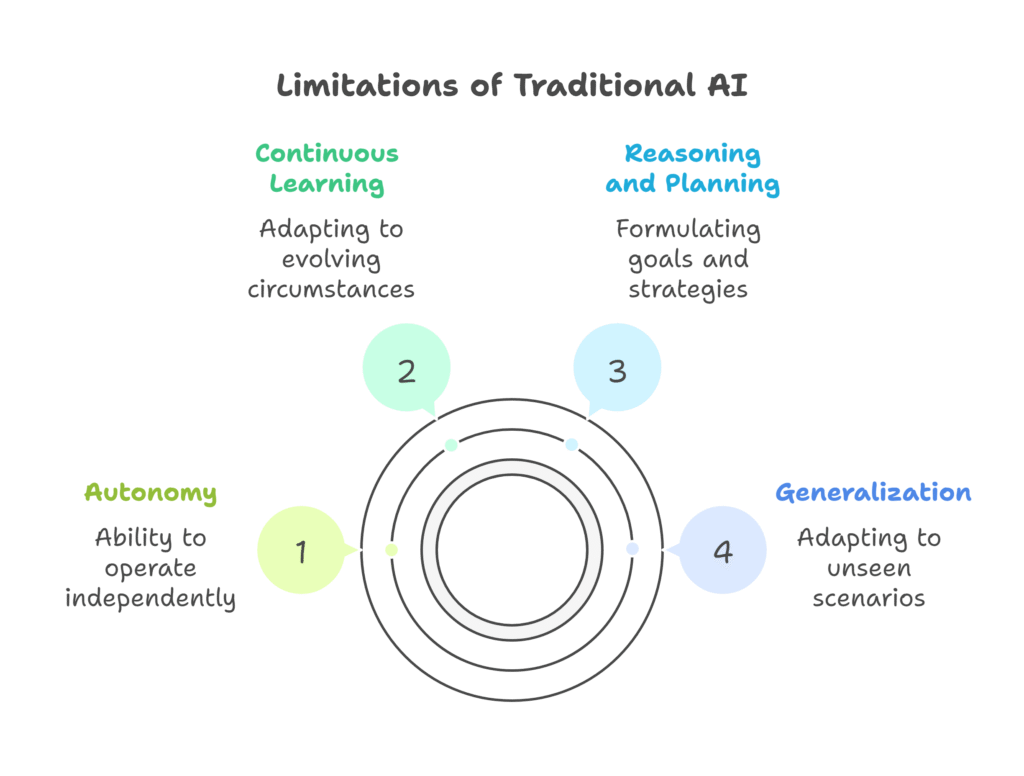
These limitations highlight the need for a more sophisticated approach to AI that can overcome these challenges and unlock new possibilities.
The Rise of Agentic AI
Agentic AI represents a paradigm shift in AI development, focusing on creating intelligent agents that can perceive their environment, reason about it, plan actions, and execute them to achieve specific goals. These agents are designed to be autonomous, adaptable, and capable of learning continuously.
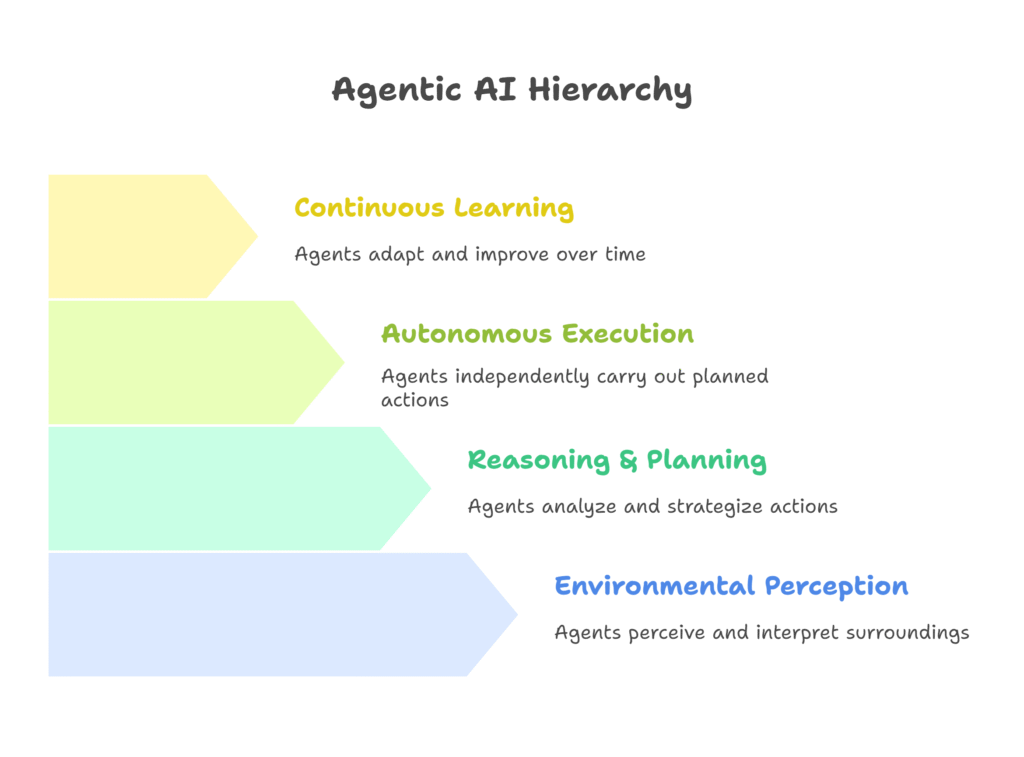
Key characteristics of Agentic AI include:
- Autonomy: Agentic AI systems can operate independently, making decisions and taking actions without constant human supervision.
- Goal-Orientedness: These agents are designed to achieve specific goals, and they actively plan and execute actions to reach those goals.
- Perception: Agentic AI systems can perceive their environment through sensors and data inputs, allowing them to understand the current state of the world.
- Reasoning: These agents can reason about the information they gather, drawing inferences and making predictions to inform their decision-making.
- Planning: Agentic AI systems can create plans of action to achieve their goals, considering various factors and potential obstacles.
- Learning: These agents can learn from their experiences, adapting their behavior and improving their performance over time.
- Interaction: Agentic AI systems can interact with other agents and humans, collaborating to achieve common goals.
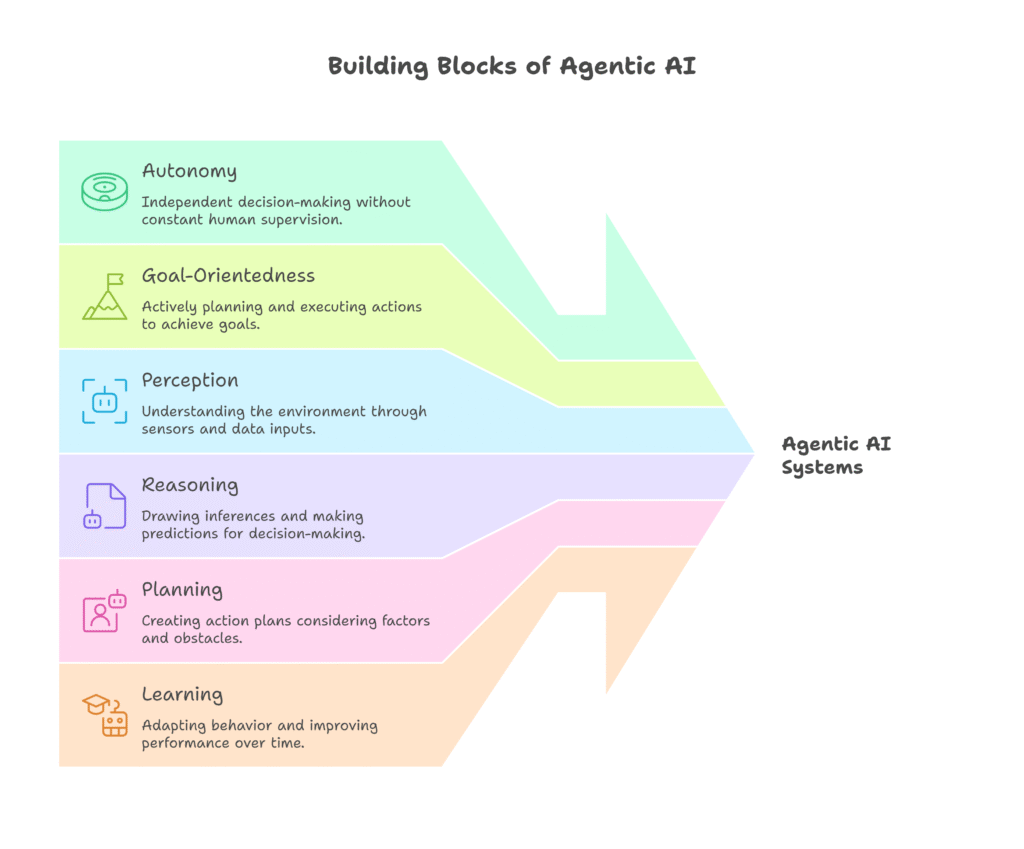
Core Components of Agentic AI
Agentic AI systems typically consist of several core components that work together to enable intelligent behavior:
- Perception Module: This module is responsible for gathering information from the environment through sensors and data inputs.
- Knowledge Base: This component stores information about the world, including facts, rules, and relationships.
- Reasoning Engine: This module uses the knowledge base to draw inferences, make predictions, and solve problems.
- Planning Module: This component creates plans of action to achieve specific goals, considering various factors and potential obstacles.
- Action Execution Module: This module executes the planned actions in the environment.
- Learning Module: This component learns from experiences, adapting behavior and improving performance over time.
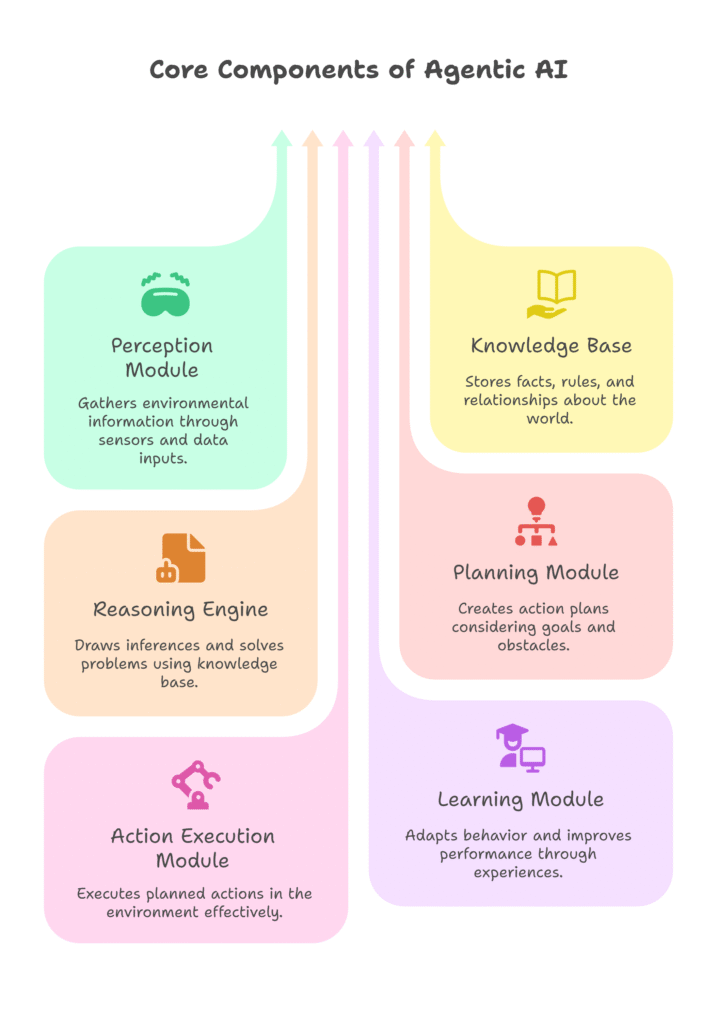
Applications of Agentic AI
Agentic AI has the potential to revolutionize various industries and applications, including:
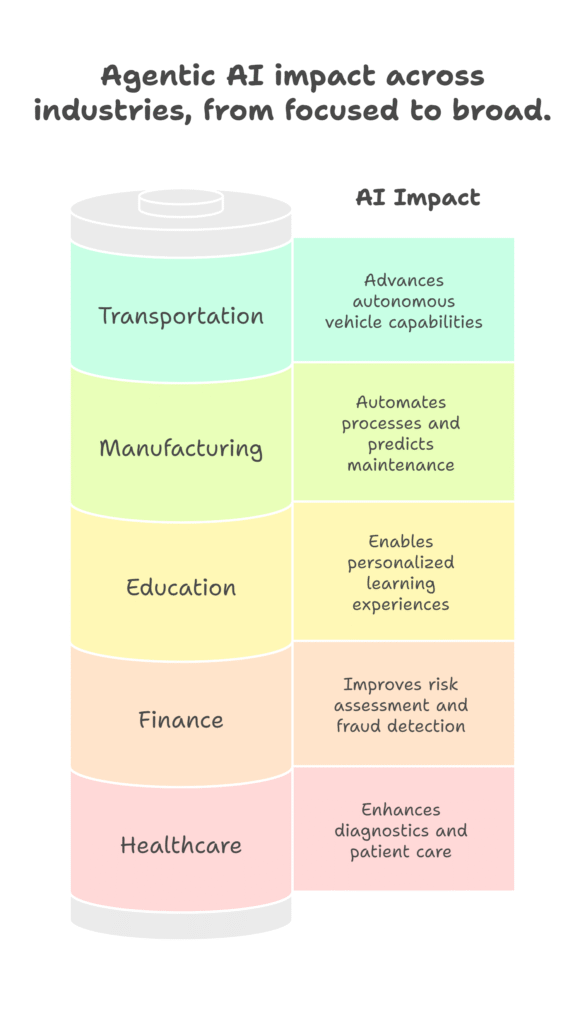
- Robotics: Agentic AI can enable robots to perform complex tasks in unstructured environments, such as manufacturing, logistics, and healthcare.
- Autonomous Vehicles: Agentic AI is crucial for developing self-driving cars that can navigate complex traffic situations and make real-time decisions.
- Personal Assistants: Agentic AI can power personal assistants that can proactively manage schedules, provide personalized recommendations, and automate tasks.
- Cybersecurity: Agentic AI can be used to detect and respond to cyber threats in real-time, protecting critical infrastructure and data.
- Healthcare: Agentic AI can assist doctors in diagnosing diseases, developing treatment plans, and monitoring patient health.
- Supply Chain Management: Agentic AI can optimize supply chains, predict demand, and manage inventory levels.
Challenges and Opportunities
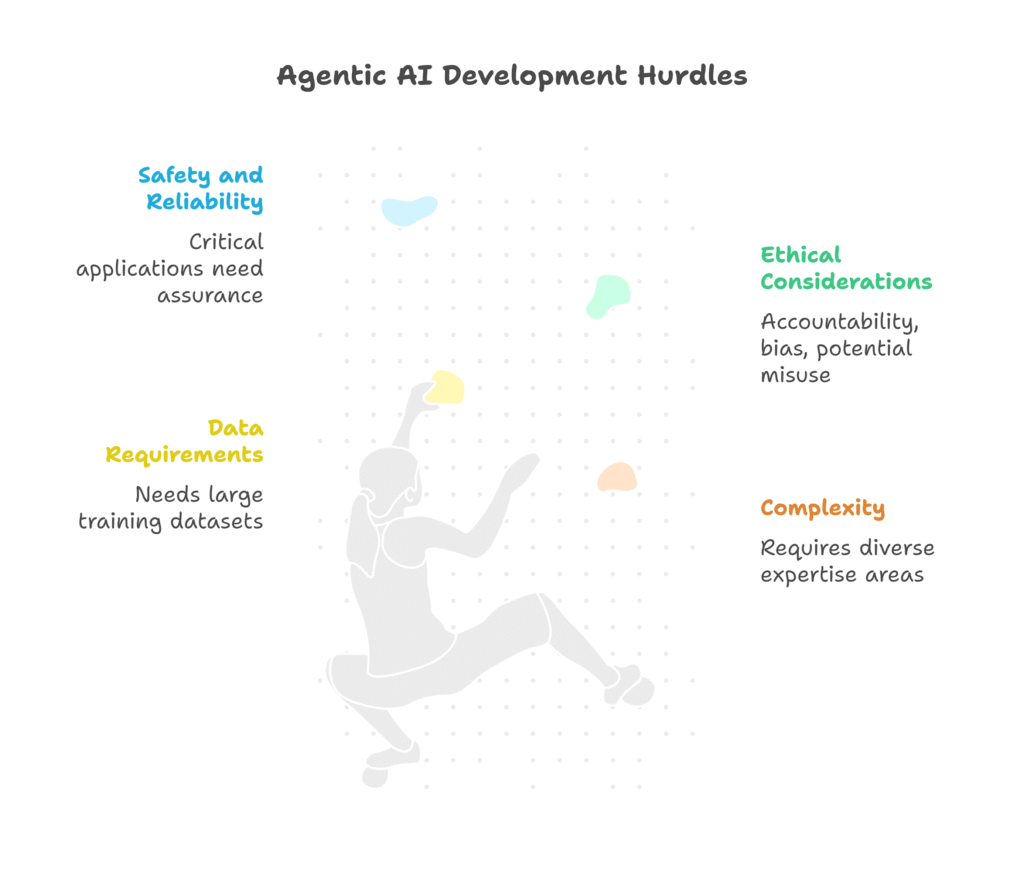
While Agentic AI holds immense promise, its development and deployment also present several challenges:
- Complexity: Building Agentic AI systems is complex, requiring expertise in various fields, including AI, robotics, and control theory.
- Data Requirements: Agentic AI systems often require large amounts of data to train and validate their performance.
- Ethical Considerations: The autonomy of Agentic AI raises ethical concerns about accountability, bias, and potential misuse.
- Safety and Reliability: Ensuring the safety and reliability of Agentic AI systems is crucial, especially in critical applications.
Despite these challenges, the opportunities presented by Agentic AI are significant. By addressing these challenges and fostering collaboration between researchers, developers, and policymakers, we can unlock the full potential of Agentic AI and create a future where intelligent agents enhance our lives and solve some of the world’s most pressing problems.
The Future of AI
The shift from traditional AI to Agentic AI represents a fundamental change in the way we approach artificial intelligence. Agentic AI promises to deliver more autonomous, adaptable, and intelligent systems that can tackle complex problems and create new opportunities across various industries. As research and development in this field continue to advance, we can expect to see even more innovative applications of Agentic AI emerge in the years to come, shaping the future of technology and society.